


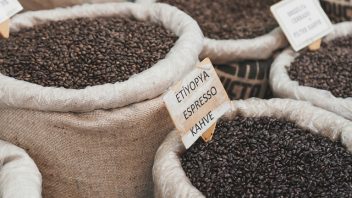
There are several ways to invest in coffee, whose price is trading around historic highs. Let us introduce the main investment options and their specific features.
CFD contracts on coffee
The most direct route is to trade coffee as a commodity through CFD contracts. This option is available from most brokers, including eToro and XTB. CFDs offer high liquidity and the opportunity to profit even from short-term price movements. However, it is important to remember that CFDs are complex leveraged instruments that carry a high risk of losing money quickly. They are mainly suitable for short-term speculation.
ETFs focused on coffee
There are specialised ETFs focused on coffee on the global market, such as the iPath Series B Bloomberg Coffee Subindex Total Return ETN (JO) and the iPath Pure Beta Coffee ETN (CAFÉ). These funds are another way to invest in coffee without having to trade the commodity directly. For a UK investor, however, this option is practically unavailable. Commonly used UK and European brokers do not usually offer these specialised ETFs, and gaining access to them is complicated for an ordinary investor.
Shares of coffee companies
For most long-term investors, shares of coffee companies are an attractive way to invest in the coffee sector. By investing in shares, you gain a stake in companies with established brands, well-developed business models and regular revenues. In addition to the price of coffee itself, you can also benefit from the added value these companies create, whether through product innovation, expansion into new markets or efficient management. Many of these companies also pay regular dividends, which can provide an interesting source of passive income.
In the following overview, we will focus specifically on equity investments in companies that benefit significantly from the coffee business. We will introduce both specialised coffee chains and larger conglomerates where coffee accounts for a significant part of their business.
Investment guide to the coffee sector
Coffee shop chains
Starbucks (SBUX)
Starbucks is not just a coffee shop. It is a global phenomenon that has changed the way the whole world drinks coffee. Since its founding in 1971 at Seattle’s Pike Place Market, the company has grown to more than 35,000 locations in over 80 countries. Starbucks created the concept of a “third place” between home and work, where people can enjoy premium coffee in a pleasant environment.
In addition to traditional coffee shops, the company also focuses on selling packaged coffee and accessories, and in recent years it has invested heavily in digital technologies. Its mobile app and loyalty programme are among the most successful in the retail sector. More than 50% of its orders in the US come from the mobile app. In China, where it opens a new branch every week, it is experimenting with luxury Starbucks Reserve stores and customer education about coffee culture.
Why buy:
- Its position as a global leader with an exceptionally strong brand allows it to charge premium prices and maintain high margins.
- Successful expansion in China represents enormous growth potential, as the local market is still only at the beginning of its “coffee revolution”.
- An innovative approach to digital technologies and its loyalty programme creates stable revenue and a strong bond with customers.
- A steadily rising dividend and a stable share buyback programme make the company an attractive choice for long-term investors.
Risks:
- A saturated US market may limit further domestic growth, with some areas already showing signs of cannibalisation between branches.
- Rising labour costs, especially in the US, are putting pressure on profit margins.
- Volatility in coffee prices as a raw material can significantly affect profitability, even though the company uses hedging strategies.
Dutch Bros (BROS)
Dutch Bros is a fascinating American dream story that began in 1992 as a small coffee stand in Grants Pass, Oregon. Today, it is one of the fastest-growing coffee shop chains in the US, focusing mainly on the drive-through format. The company is known for its informal approach, energetic atmosphere and strong corporate culture, which resonates particularly with younger customers.
Dutch Bros differs from traditional coffee shops through its emphasis on cold coffee, energy drinks and personalised drink creations. Its unique business model combines the efficiency of drive-through service with a friendly approach to customers, where baristas, known as “broistas”, build personal relationships with customers.
Why buy:
- An aggressive expansion plan targeting 4,000 locations by 2028 represents significant growth potential.
- A unique corporate culture and a strong connection with younger generations create a loyal customer base.
- The high efficiency of the drive-through model enables faster service and lower property costs.
- Strong same-store sales growth shows the concept is succeeding even at existing locations.
Risks:
- A relatively high share valuation may lead to higher volatility.
- Management’s limited experience in running a large branch network may create risk during rapid expansion.
- Strong competition from established chains could threaten growth plans.
- Dependence on the US market and the absence of international diversification.
Westrock Coffee Company (WEST)
Westrock Coffee Company represents a unique approach to the coffee business, focusing on a vertically integrated “bean to cup” model. The company was founded in 2009 with a vision of creating a transparent and sustainable supply chain in the coffee industry.
Westrock works directly with more than 500,000 farmers in 35 countries and provides not only fair prices for coffee, but also education and support to improve production quality. Its business model includes coffee processing, roasting and distribution for a wide range of customers, from retail chains to restaurants and office spaces.
Why buy:
- A unique vertically integrated model provides better control over quality and costs.
- Growing demand for sustainably sourced coffee supports its business model.
- A diversified customer base reduces dependence on individual buyers.
- A strong position in the fast-growing ready-to-drink coffee segment.
Risks:
- The company’s smaller size limits its ability to compete with larger players.
- High dependence on coffee prices as a commodity.
- Lower share liquidity may lead to higher volatility.
- The complexity of managing a demanding supply chain.
Coffee machine and accessory manufacturers
DeLonghi (DLG.MI)
DeLonghi is an Italian company with a rich history dating back to 1902. Although it began as a manufacturer of industrial heating components, today it is best known for its high-end coffee machines for home use. The company has become synonymous with quality Italian espresso prepared in the comfort of your own home.
In recent years, DeLonghi has significantly expanded its portfolio through acquisitions of brands such as Braun (home appliances) and Kenwood (kitchen appliances). Its main competitive advantage remains its strong position in the automatic coffee machine segment, where it is considered one of the technology leaders.
Why buy:
- A dominant position in the growing segment of automatic coffee machines for the home.
- A strong brand associated with Italian coffee culture and quality.
- The growing trend of home coffee preparation supports its core business.
- Geographical revenue diversification across Europe, the Americas and Asia.
Risks:
- Strong dependence on the European market at a time of economic uncertainty.
- Growing competition from Asian manufacturers in the lower price segment.
- The cyclical nature of consumer goods may affect sales during a recession.
- The need for continuous investment in research and development to maintain competitiveness.
Keurig Dr Pepper (KDP)
Keurig Dr Pepper was created in 2018 through the merger of coffee machine maker Keurig Green Mountain and drinks company Dr Pepper Snapple. The company revolutionised the way Americans prepare coffee at home and in the office with its K-Cup pod system.
Its business model is based on the so-called “razor-and-blades strategy”. It sells coffee machines at relatively low prices and makes money from repeat pod sales. KDP also has exclusive licensing agreements with many popular coffee brands, allowing it to offer a wide range of favourite coffees in K-Cup format.
Why buy:
- Predictable revenue from pod sales creates stable cash flow.
- Strong partnerships with major coffee brands expand its offering.
- A diversified portfolio that also includes soft drinks reduces risk.
- An attractive dividend yield with growth potential.
Risks:
- Growing environmental pressure on single-use coffee pods.
- High dependence on the North American market.
- Increasing competition in the pod system segment.
- Potential changes in consumer preferences towards more traditional coffee preparation methods.
Diversified giants
Nestlé (NESN.SW)
Nestlé is the world’s largest food company, with a history dating back to 1866. It dominates the coffee segment thanks to brands such as Nescafé, the world’s best-selling instant coffee, and Nespresso, which defined the premium coffee pod segment. The company also owns brands such as Dolce Gusto and Starbucks for home preparation.
Nestlé invests significantly in innovation in the coffee segment, including the development of new products and sustainable solutions. Its Nespresso pod recycling system is regarded as a benchmark for environmental responsibility in the coffee industry.
Why buy:
- An extremely stable company with a long history of regular dividends.
- Strong global brands in the coffee segment with dominant market positions.
- Significant investment in research and development ensures continuous innovation.
- A diversified product portfolio provides protection against fluctuations in individual segments.
Risks:
- The company’s size limits its potential for rapid growth.
- Coffee represents only part of the overall business.
- Competition from specialised coffee companies in premium segments.
- Environmental pressure on the use of plastics and single-use packaging.
Restaurant Brands International (QSR)
Restaurant Brands International is one of the world’s largest fast-food companies. In the coffee segment, it is significant mainly because it owns the Tim Hortons chain, which is a dominant force in the Canadian market and is expanding globally. Tim Hortons is known not only for its coffee, but also for its combination of coffee and baked goods, which creates a unique market position.
The company uses a franchise model, enabling rapid expansion with minimal capital expenditure. In recent years, Tim Hortons has been trying to modernise its offering and digital presence so it can compete more effectively with Starbucks and other chains.
Why buy:
- Tim Hortons’ strong position in Canada provides stable revenue.
- The franchise model generates predictable revenue with high margins.
- Potential for international expansion, especially in Asia.
- An attractive dividend yield with a history of regular growth.
Risks:
- High dependence on the Canadian market.
- Competitive pressure from established brands during international expansion.
- The need for significant investment in modernising the concept.
- Dependence on the success of franchisees may affect growth and brand reputation.
Investment strategy: a few tips before you start
For conservative investors
If you are looking for a stable investment with lower risk, focus on established companies with a long history and a strong market position. Nestlé (NESN.SW) and Starbucks (SBUX) are ideal choices thanks to their size, stable dividends and predictable revenue. These companies may not offer dramatic growth, but they provide a solid foundation for long-term investment.
For growth investors
Investors seeking higher growth potential should consider Dutch Bros (BROS) or Westrock Coffee Company (WEST). These companies carry higher risk, but their innovative approaches and aggressive growth strategies may deliver above-average returns. However, it is important to expect higher volatility and be prepared for a longer investment horizon.
For dividend investors
Keurig Dr Pepper (KDP) and Restaurant Brands International (QSR) offer attractive dividend yields with growth potential. Their stable business models and predictable cash flow provide a good basis for regular dividend income.
Diversification strategy
For optimal exposure to the coffee sector, consider combining different types of companies. For example, a portfolio containing Starbucks (retail), KDP (manufacturing and pods) and Nestlé (global diversification) can provide a well-balanced mix of growth, stability and dividend income.