


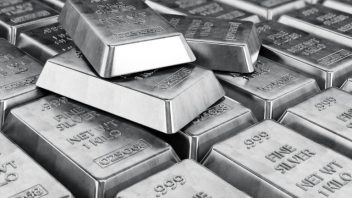
We will show you what silver is used for and how it is mined.
| 1 t.oz = 43.72 GBP | 1 t.oz = 58.19 USD |
| 1 g = 1.41 GBP | 1 g = 1.87 USD |
Chart with the current silver price
Graph for last 7 days | 30 days | 3 months | 6 months | 1 year | 3 years | 5 years | 10 years
74% of retail investor accounts lose money when trading CFDs with this provider.
Price change
| 24h | 1.94 % | Week | -1.66 % |
| Month | -11.85 % | Year | -18.35 % |
Historical prices
| t.oz | g | |
|---|---|---|
| Oct 20, 2026 | 43.72 GBP 58.19 USD | 1.41 GBP 1.87 USD |
| Oct 19, 2026 | 42.89 GBP 57.09 USD | 1.38 GBP 1.84 USD |
| Oct 16, 2026 | 42.81 GBP 56.98 USD | 1.38 GBP 1.83 USD |
| Oct 15, 2026 | 43.15 GBP 57.42 USD | 1.39 GBP 1.85 USD |
| Oct 14, 2026 | 41.80 GBP 55.63 USD | 1.34 GBP 1.79 USD |
| Oct 13, 2026 | 44.45 GBP 59.16 USD | 1.43 GBP 1.90 USD |
| Oct 12, 2026 | 45.31 GBP 60.30 USD | 1.46 GBP 1.94 USD |
| Oct 09, 2026 | 45.69 GBP 60.81 USD | 1.47 GBP 1.96 USD |
| Oct 08, 2026 | 44.46 GBP 59.18 USD | 1.43 GBP 1.90 USD |
| Oct 07, 2026 | 44.92 GBP 59.78 USD | 1.44 GBP 1.92 USD |
| Oct 06, 2026 | 46.09 GBP 61.34 USD | 1.48 GBP 1.97 USD |
| Oct 05, 2026 | 45.88 GBP 61.06 USD | 1.48 GBP 1.96 USD |
| Oct 02, 2026 | 45.37 GBP 60.39 USD | 1.46 GBP 1.94 USD |
| Oct 01, 2026 | 45.81 GBP 60.97 USD | 1.47 GBP 1.96 USD |
| Sep 30, 2026 | 45.39 GBP 60.41 USD | 1.46 GBP 1.94 USD |
| Sep 29, 2026 | 46.17 GBP 61.46 USD | 1.48 GBP 1.98 USD |
| Sep 28, 2026 | 45.56 GBP 60.63 USD | 1.46 GBP 1.95 USD |
| Sep 25, 2026 | 48.30 GBP 64.28 USD | 1.55 GBP 2.07 USD |
| Sep 24, 2026 | 47.97 GBP 63.85 USD | 1.54 GBP 2.05 USD |
| Sep 23, 2026 | 48.42 GBP 64.45 USD | 1.56 GBP 2.07 USD |
What silver is and what it is used for
Silver (chemical symbol Ag) is a noble precious metal, just like gold or platinum. It is white in colour and has excellent thermal and electrical conductivity. Silver is easy to process industrially because it is malleable and relatively soft.
Silver is highly important because of its use, especially in the electronics industry. The metal is used to produce conductive connections, often in alloy form. It is also used by the photographic industry to develop traditional photographs. Silver is used to make jewellery such as earrings and rings. For these reasons, silver is one of the most traded commodities in the world.
Last but not least, silver was historically used as a means of payment. As early as ancient Rome, it was used to mint coins that circulated throughout the territory of the empire at that time. Today, silver is used more as an investment, in the form of bars or, for example, commemorative coins.
What silver fineness means
Silver, like gold, is often used in alloy form. Copper (chemical symbol Cu) is most commonly added to it. The “purity” of the alloy is expressed by fineness on a scale from 0 to 6. The higher the number, the more copper has been added, meaning the alloy has lower fineness. Silver bars usually have a fineness of “0”, while investment coins may have a fineness in the range of 0 to 3.
Global silver production
Around 800 million ounces of silver are mined worldwide each year, roughly 25,000 tonnes. To give you an idea, this amount would fill approximately one full official Olympic swimming pool.
The largest amount of silver is mined in Mexico, around 173 million ounces a year. It is followed by Peru with about 131 million ounces and China with around 113 million. Those three countries together account for more than half of world output. Russia, Poland and Chile are significant producers as well.
What affects the price of silver
Silver is largely affected by industrial demand. Investors in silver coins and bars account for only a small share of global demand. It is also true that, like gold, silver is an “investment for difficult times”. People mainly buy physical silver during periods of uncertainty and high inflation.
If demand for electronics, or more specifically electronic components, continues to grow while silver mining does not increase significantly, the market price of silver may rise.
The price of silver has more than a hundred years of records behind it and between October 2025 and January 2026 it broke records that had stood for decades. Let us look at how the value of this precious metal has developed from the First World War to today and what is behind its sharp rise.
Historical development of the silver price
You can trace the price of silver back more than a hundred years. It is usually quoted in troy ounces (one troy ounce equals 31.1 grams) and in US dollars (USD). Less often, you will also see it converted to one gram.
From the First World War to the economic crisis
In 1915, silver traded at 0.50 USD per ounce. A gradual decline then followed.
Over the next fifteen years, the price fell to 0.28 USD. The United States was hit by an economic crisis at that time, and silver recovered from it only very slowly.
The silver boom in the 1970s and the 1980 peak
The real turning point came after 1971. The US abolished the gold standard, inflation rose, and silver began to climb from roughly 1.50 USD per ounce.
The main driver, however, was the Hunt brothers, two Texas billionaires who tried to buy up most of the available silver and drive the price higher. They succeeded completely. In January 1980, silver jumped to almost 50 USD per ounce.
But then came a harsh reality check. The price collapsed back towards ten dollars and continued to fall in the following years. It found a bottom in the early 1990s at around 3.70 USD.
The 50 USD ceiling and its breakout
In April 2011, silver climbed to 48.70 USD per ounce. It therefore once again came close to the fifty-dollar mark. And once again, it failed to break through it.
This level acted as a ceiling for a full 45 years. It was only broken in October 2025, when the spot price of silver (the price for immediate delivery) passed the 45-year-old record from 1980 at 49.95 USD per ounce.
Then things moved quickly. At the end of November 2025, the spot price jumped to a new all-time high of more than 55 USD per ounce. And in January 2026, it moved into truly extreme territory, when for the first time in history it also exceeded the 115 USD mark and briefly reached a record of roughly 121 USD.
Stabilisation in 2026 and what is behind the growth
After the January peak came the largest single-day fall in the history of the silver market, and the price ended up at roughly half of where it had been at the top. By the middle of 2026 it had settled into a range of around 57 USD to 59 per troy ounce.
The main driver of the entire rise was the widening gap between supply and demand. Industry is consuming record amounts of the metal, mainly because of photovoltaics and chip production. Mining, however, remains inflexible and cannot respond quickly to rising demand.
Future outlook for the silver price
According to a very optimistic scenario, if the metal reaches its previous highs from 2011, it could climb to as much as 73 US dollars over the next five years.
This is not investment advice.
SILVER .74% of retail investor accounts lose money when trading CFDs with this provider.
How to trade silver
Silver can be traded either in physical or virtual form. We will start with “real” investments in tangible silver.
The first way to invest is to buy silver bars. This is the “purest” way to invest in this metal, because bars most closely reflect its market value.
Bars can be purchased in weights ranging from a few grams to several kilograms. However, you should expect a significant dealer margin.
If you are interested in collecting, you can buy silver coins. The motif engraved on a coin often depicts important historical figures or events. This investment method is slightly more speculative, because you are “betting” on the success of the specific coin motif you have purchased.
Silver jewellery (together with gold jewellery) is among the most popular. The advantage is that you can choose a piece exactly according to your preferences, or have it customised to order. Giving a loved one a necklace or earrings is certainly more personal than giving them an investment bar.
Trading via CFDs is now increasingly popular among traders. In this case, the investor does not buy the metal physically, but “only” speculates on whether its price will rise or fall. The contract is usually for a volume of 1 troy ounce.
Why buying physical silver is not so advantageous, and what is the alternative?
In addition to buying silver in the form of physical bars, there are other ways to invest in silver. These mainly include buying ETFs, or exchange-traded funds, and shares of mining companies. Let us look at selected stocks that allow you to invest in silver.
iShares Silver Trust (ticker SLV) is one of the largest and best-known ETFs focused on silver. This fund, managed by the global asset manager BlackRock, tracks the price of physical silver, which means investors gain exposure directly to the price of this precious metal.
The silver is stored in vaults in London. SLV therefore provides a liquid way to invest in silver without the need to own the physical metal. In other words, you do not need to keep silver directly with you, for example in a safe at home, and in effect you also own part of the silver stored in the vault of this ETF’s manager.
- Underlying asset: Physical silver.
- Returns: Derived from the price of silver.
- Fees: The annual management fee is approximately 0.50%. This fee is not paid directly by the investor, but is already priced into the current share price.
- Liquidity: High, this is one of the most traded silver ETFs.
- Year established: 2006.
- Assets under management: Over 12 billion USD.
- Available from broker: eToro, https://www.etoro.com/markets/slv 52% of retail investor accounts lose money when trading CFDs with this provider..
Sprott Physical Silver Trust (ticker PSLV) is an ETF fund that gives investors direct exposure to physical silver. The fund is managed by Sprott Asset Management, and its main advantage is that the physical silver is stored in secure vaults.
- Underlying asset: Physical silver.
- Returns: Derived from the price of silver.
- Fees: The annual management fee is approximately 0.62%. This fee is not paid directly by the investor, but is already priced into the current share price.
- Liquidity: High.
- Manager: Sprott Asset Management.
- Year established: 2010.
- Assets under management: Over 3.7 billion USD (smaller than SLV).
- Available from brokers: eToro and XTB.
In addition to ETFs, investors can also invest directly in shares of mining companies that specialise in silver. Below, we list some of the most important companies in this sector.
Wheaton Precious Metals Corp. (ticker WPM) is a precious metals mining company based in Vancouver, Canada. The company operates using a so-called “streaming” model, where it finances mining companies in exchange for a future share of precious metals production, especially silver, gold, palladium and cobalt.
- Underlying asset: Commodities such as silver, gold and other precious metals.
- Dividends: Paid consistently, with a long-term dividend yield averaging 1.6% per year.
- Company cash flow: Stable.
- Available from brokers: eToro and XTB.
ETFs focused on physical silver, such as the aforementioned SLV, are suitable for those who want direct exposure to the silver price at low cost.
Pan American Silver Corp. (ticker PAAS) is one of the world’s largest silver mining companies. It operates across the Americas, and the company currently runs 12 mines in Latin America, Canada and Argentina. The company also mines other metals such as gold, which gives it diversification. Stable production and a strong balance sheet make this company a solid choice for long-term investors.
- Primary activity: Silver and precious metals mining.
- Dividend yield: The company pays dividends regularly (quarterly). The dividend yield is around 2% per year.
- Market capitalisation: The company is among the largest of its kind.
- Available from brokers: eToro and XTB.
74% of retail investor accounts lose money when trading CFDs with this provider.
On the other hand, ETFs such as SIL and shares of mining companies, for example Wheaton Precious Metals, may offer higher potential returns, but also higher risk. Every investor should consider their investment goals, risk tolerance and time horizon before deciding how to invest in silver.